July — October 2008
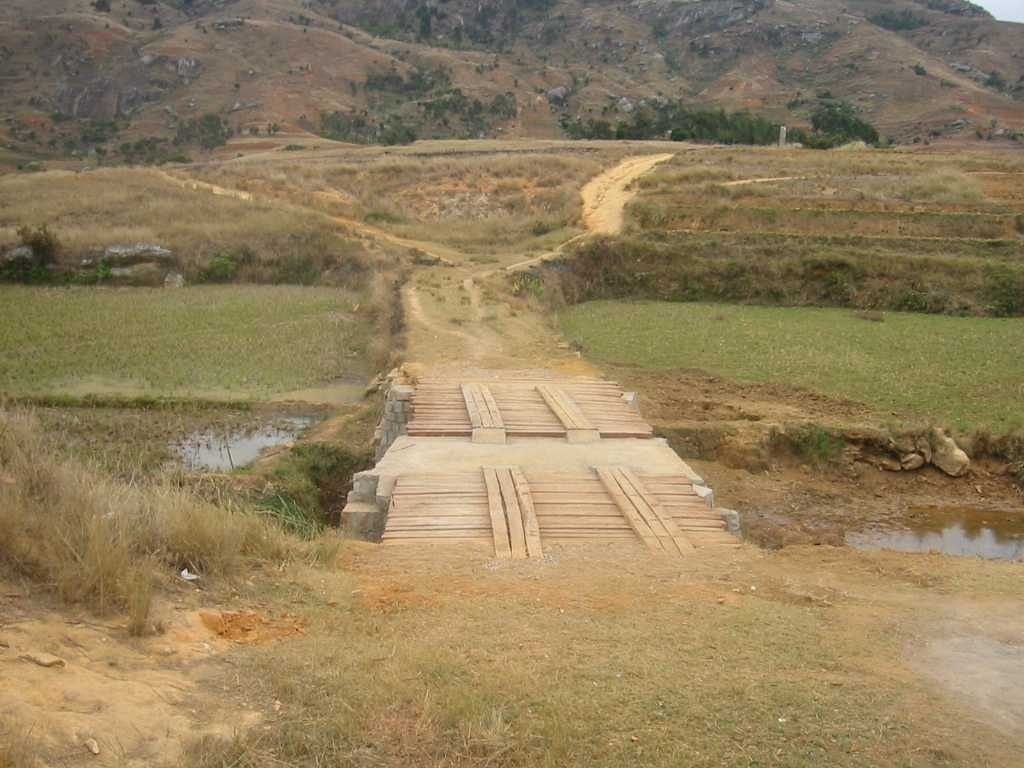
The Friendship Bridge
Three villages cut off at every flood. One volunteer who flew out alone, about fifty villagers, and a single shovel. The site diary, day by day, up to the opening on 29 September.
Every trip produces a written account. Those of 2008, 2009 and 2011 were written on site, day by day, and sent back to France to be published as they arrived.
Three villages cut off at every flood. One volunteer who flew out alone, about fifty villagers, and a single shovel. The site diary, day by day, up to the opening on 29 September.
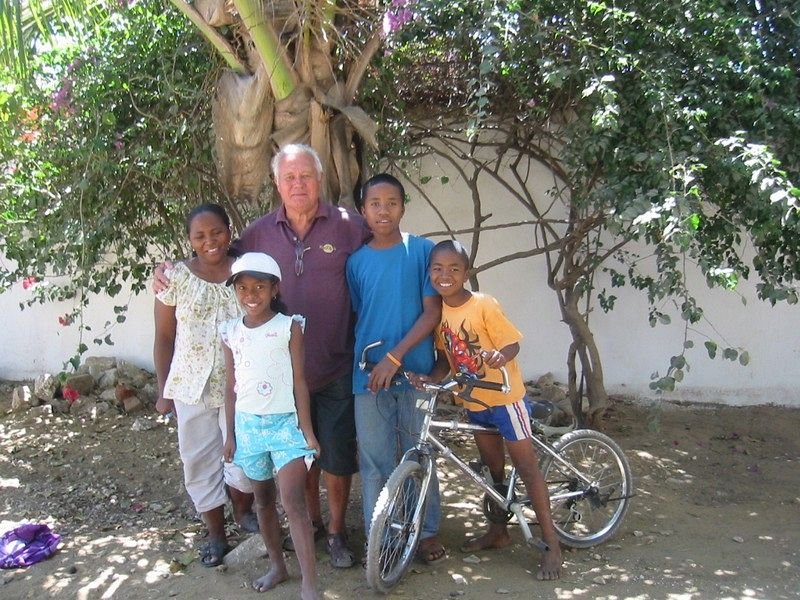
The same ten weeks, away from the building site: a tree nursery run by twenty-five people, a week's holiday for sixteen children, €150 of school supplies — and an orphanage in Toliara whose landlady was about to take the house back.
October 2009: the bridge celebrated a year on, €4,400 spent, 400 kg distributed. October 2011: the Toliara orphanage extended rather than finished, and a flour mill costed at €1,300.
Ten weeks, of which the bridge took ten days. In the rest of that time the volunteer found a tree nursery near Fianarantsoa where twenty-five people fill plant pots with compost they make themselves, and where women carry water up six hundred metres of slope. Every seedling is given to villagers for replanting.
He set aside €150 for school supplies, shared between the two orphanages and a nursery school — less than the €250 to €300 he had been quoted, because the bridge had overrun. He took sixteen children on holiday for a week to Ranomafana, sleeping in mud-walled houses with no electricity and no running water, and wrote that the older boys cut steps into a forty-five-degree slope one evening so that he could get up and down without difficulty.
And in Toliara he found fourteen people living in a rented house the landlady meant to reclaim. Some of the children had been there seven years; three had spent four years on the street. He drew up plans, proposed paying rent in advance so that materials could be bought, and wrote: “€360 a year is not an impossible sum to find.” That appeal is how the association's first orphanage came to be built.
In 2009 a group travelled for a month, from Antananarivo to Toliara, by bush taxi and by train — thirteen hours to cover 170 kilometres. On 12 October the villagers held a celebration for the bridge's first anniversary and set out what it had changed: bush taxis could now reach them, so produce and crafts found a market; a brickworks had opened; children reached school “without risking drowning”; and, above all, an ambulance could now drive into the villages, twenty-five kilometres from the hospital.
At the Toliara orphanage the group found the lavatories working but no running water and no electricity — washing depended on a neighbour's well fifty metres away. School was two and a half kilometres off, and bicycles at €50 each were out of reach. The diary records simply: “They live on top of one another.”
The trip sent €4,400 to Madagascar, of which about €774 remained on departure, and distributed more than 400 kg of clothes, toys and soap. A fortnight after the return: “other costs have come up, the coffers are empty. And the work has stopped.”
By 2011 the association had chosen to extend the Toliara orphanage rather than finish it, adding a shop so that the household could earn its own income. Two more children had arrived. The next plan was a flour mill, costed at €1,300.
The bridge, the school supplies, a week's holiday for sixteen children, and a roof for fourteen people who were about to lose theirs.
Make a donation